
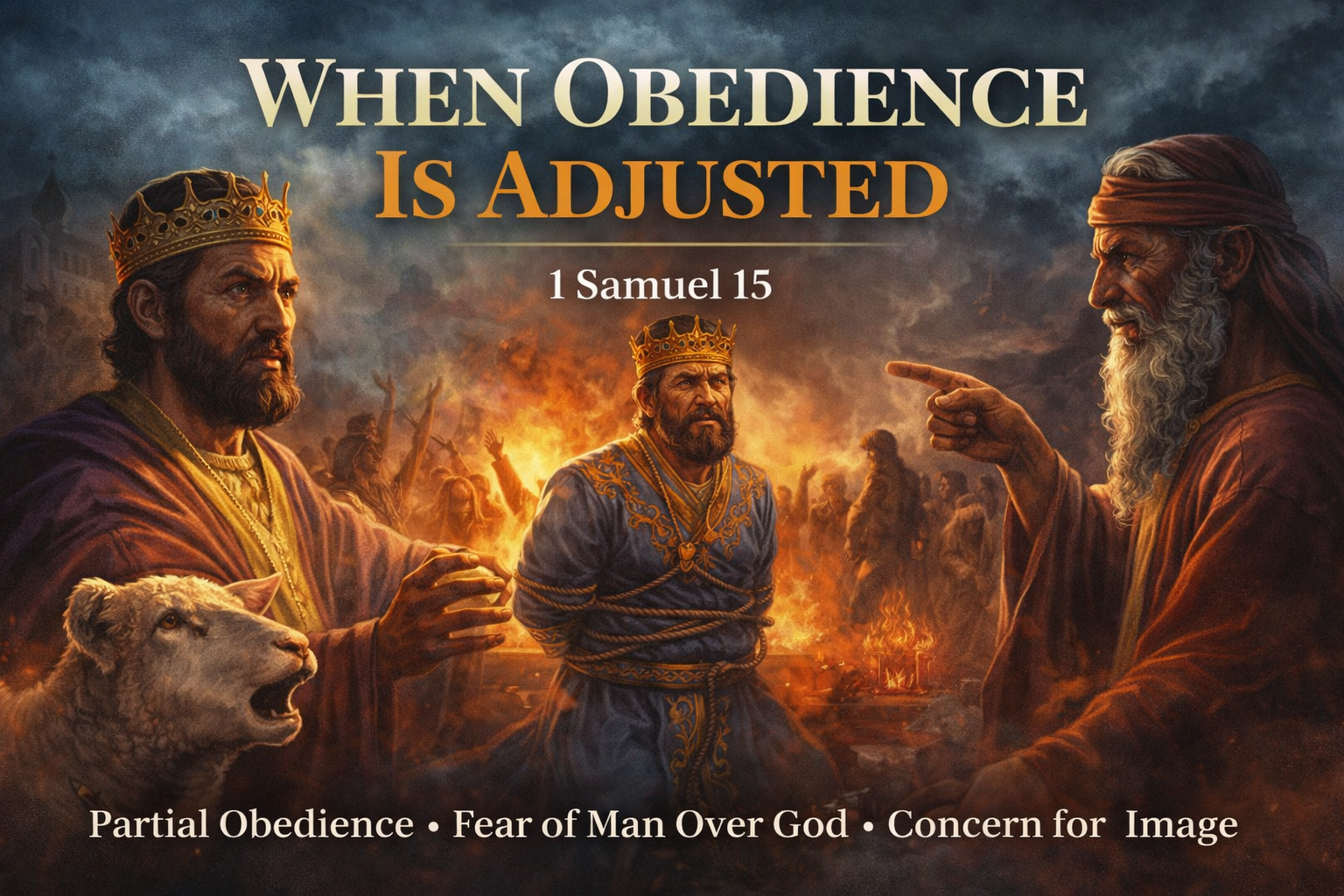
In 1 Samuel 15, Saul receives a direct instruction from God: utterly destroy the Amalekites. This wasn’t random judgment. The Amalekites had ambushed Israel in Exodus 17, attacking them at their weakest as they left Egypt — a cowardly strike against the vulnerable. Because of that wickedness, God declared judgment.
Now Saul was given the responsibility to carry it out.
The instruction was clear: destroy everything.
But Saul adjusted the terms.
He spared Agag, king of the Amalekites.
He kept the best of the spoils.
And he presented it as a good deed.
What God called disobedience, Saul reframed as devotion.
The result was devastating. Samuel told him, “Rebellion is as the sin of witchcraft, and stubbornness as iniquity and idolatry.” Then came the words no leader wants to hear: “God has rejected you as king.”
Mercy, Lord.
Saul Feared Man More Than God
Saul later admits, “I feared the people and obeyed their voice.”
He knew what God had said — but he listened to the crowd.
The fear of man will always compete with the fear of God. When approval becomes important, obedience becomes negotiable. Saul chose to protect his standing with people instead of remaining faithful to God.
And it cost him everything.
He Focused on Public Image
Even after being confronted, Saul’s concern was not repentance — it was reputation. He asked Samuel to honor him in front of the elders.
He had just been told the kingdom was torn from him… and he still wanted to look good publicly.
It is possible to sin and still care more about image than humility. True humility does not manage appearances. It bows low and takes responsibility.
He Negotiated Instead of Surrendered
God’s command was not unclear.
But Saul edited it.
He kept what seemed valuable.
He removed what seemed extreme.
Partial obedience is still disobedience.
When God speaks, we do not improve His instruction — we obey it.
Closing
1 Samuel 15 is not just about Saul. It is a mirror.
Where have we adjusted God’s instruction?
Where have we feared people more than Him?
Where have we protected our image instead of choosing humility?
Obedience may cost approval.
But disobedience costs far more.